
The short answer
A THOW is mobile by design. An ADU is a legal land-use category.
A tiny home on wheels, commonly shortened to THOW, is built on a trailer chassis and can be transported. An accessory dwelling unit, or ADU, is a secondary dwelling legally permitted on a property. A THOW does not automatically become an ADU because it is placed in a backyard. Your jurisdiction decides whether it may be occupied, rented, connected to utilities, or treated as an ADU.
What should you compare before choosing?
| Question | Tiny home on wheels | Site-built ADU |
|---|---|---|
| How is it built? | On a trailer chassis, typically off-site | On a permanent site-specific foundation |
| Can it move? | Designed to be transportable, subject to route and legal requirements | Generally part of the real property |
| Is it automatically legal to occupy? | No. Local use and occupancy rules still apply | No. It requires the applicable local approvals |
| Who handles site work? | Usually the property owner and qualified local trades | Typically part of the construction project scope |
| How are utilities handled? | Connections depend on the site and local rules | Designed and permitted with the site-built project |
| How is it financed? | Options vary and may differ from real-estate financing | May qualify for property-based financing, subject to lender rules |
Can you put a tiny home in your backyard?
Sometimes—but “it fits” and “it is allowed” are different questions. Confirm zoning, setbacks, access, fire-safety requirements, parking, occupancy, rental rules, utility connections, and whether wheels or a chassis affect classification. Ask the authority with jurisdiction for written guidance when possible.
What should you ask the local jurisdiction?
- Is a tiny home on wheels allowed on this parcel?
- Can it be occupied full time, used by family, or rented?
- Is it considered an RV, park model, movable tiny house, or ADU?
- Which permits, inspections, setbacks, and parking rules apply?
- Are independent electrical, water, or wastewater connections allowed?
- Are there HOA, deed, or private-property restrictions beyond city or county rules?
Where does Rise20 fit?
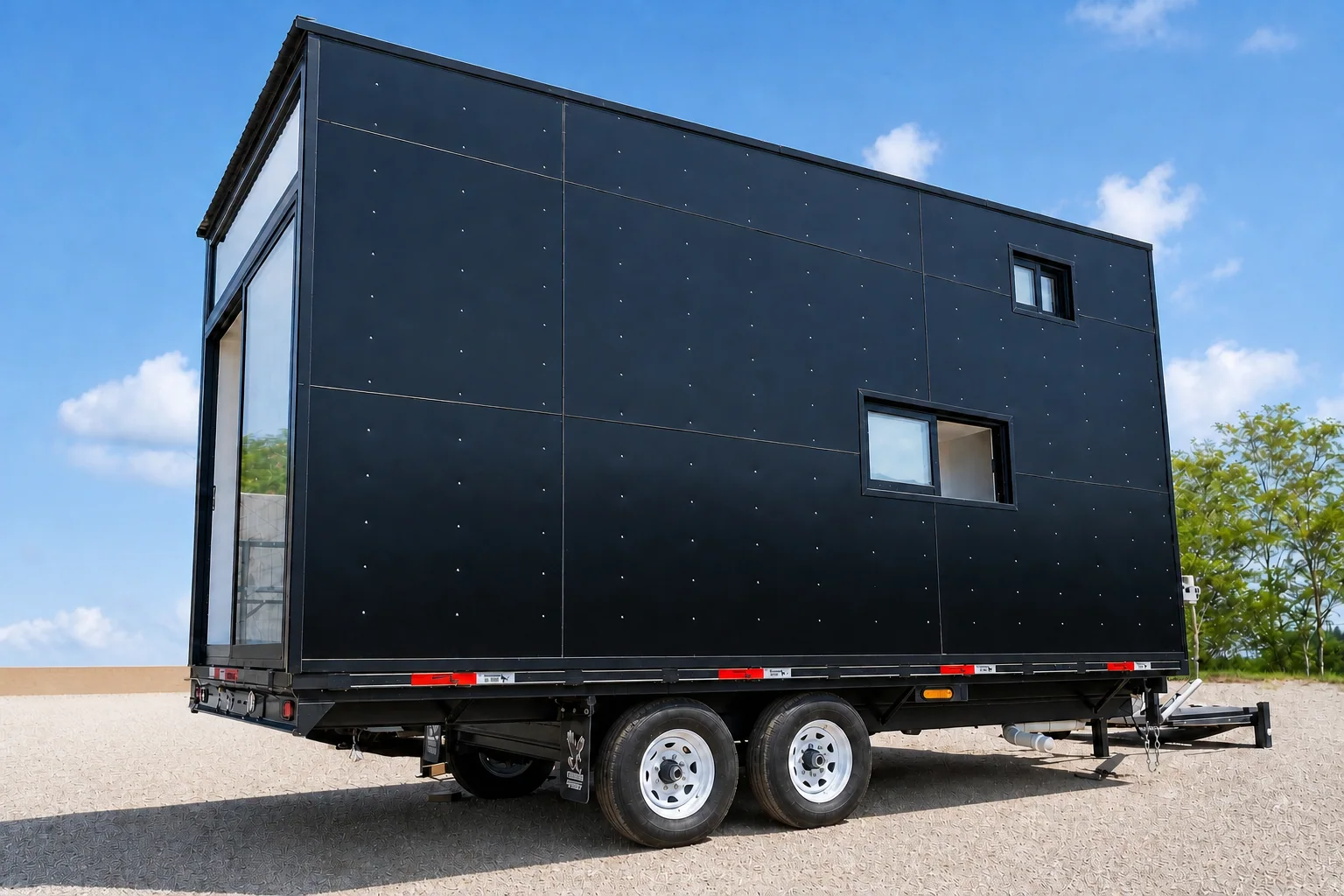
Rise20 is a customizable 8 × 20 tiny home on wheels with approximately 160 square feet plus a sleeping loft, a kitchen, full bathroom, living area, and installed core systems. LotRise builds the home and can coordinate nationwide delivery. The buyer remains responsible for confirming site fit, local permissions, supports, installation, and final utility connections.