
The short answer
Legal to own everywhere. Where you can live in one is local.
Tiny homes are legal to own in all 50 states, but no state or federal law makes them legal to live in everywhere. Where you can place a tiny home, and whether you can occupy it full time, is decided mainly by your city or county through zoning, building codes, and occupancy rules. The answer also depends on how the home is classified: a tiny house on a foundation, a manufactured home, a park model, or a recreational vehicle each follows different rules.
Key takeaways
- Ownership is legal nationwide; placement and occupancy are set locally.
- Classification drives the rules: foundation home, manufactured home, park model, or RV.
- Many jurisdictions treat tiny houses on wheels like RVs, which can limit full-time living.
- Some states and cities have adopted tiny-house provisions; others rely on general zoning.
- HOAs and deed restrictions can prohibit a tiny home even where the city allows it.
How are tiny homes classified?
| Type | Typically regulated by | What it usually means |
|---|---|---|
| Tiny house on a foundation | Local building code and zoning, sometimes with IRC Appendix Q / AQ where adopted | Treated like a small permanent dwelling; permits and inspections apply |
| Tiny house on wheels (THOW) | Local zoning; often classified as an RV, park model, or movable tiny house | May be limited to RV parks, campgrounds, or approved uses; full-time living varies |
| Manufactured home | Federal HUD code plus local zoning | Built to a national standard; placement still follows local rules |
| Accessory dwelling unit (ADU) | State ADU laws and local ordinances | A secondary dwelling on a lot with a primary home; a THOW does not automatically qualify |
Why isn’t there one national tiny house law?
In the U.S., land use is controlled mostly at the local level. States adopt building codes and sometimes pass laws that push cities to allow accessory dwellings, but the specific rules for minimum dwelling size, setbacks, parking, RV occupancy, and utility connections are usually written by each city or county. That is why two neighboring towns can treat the same tiny home very differently.
What usually makes a tiny home legal to live in?
- The right zoning: the parcel allows the use you plan, such as a primary residence, family space, guest stay, or rental.
- The right classification: the home is recognized as a dwelling, ADU, park model, or RV in a way the zoning permits.
- Approvals and inspections: required permits for placement, foundation or supports, and utility connections.
- Utilities: approved connections to power, water, and sewer or septic.
- Private rules: no HOA, deed, or lease restriction blocks it.
How can you check the rules where you live?
- Identify the jurisdiction.Find out whether your property is inside city limits or in unincorporated county land.
- Describe the home precisely.Size, on wheels or a foundation, and how it connects to utilities.
- State the intended use.Owner living, family, guests, or rental can each be treated differently.
- Ask for it in writing.Request written guidance from the planning or zoning office before you buy.
- Check private restrictions.Review HOA covenants, deed restrictions, and any lease terms.
Where does Rise20 fit?
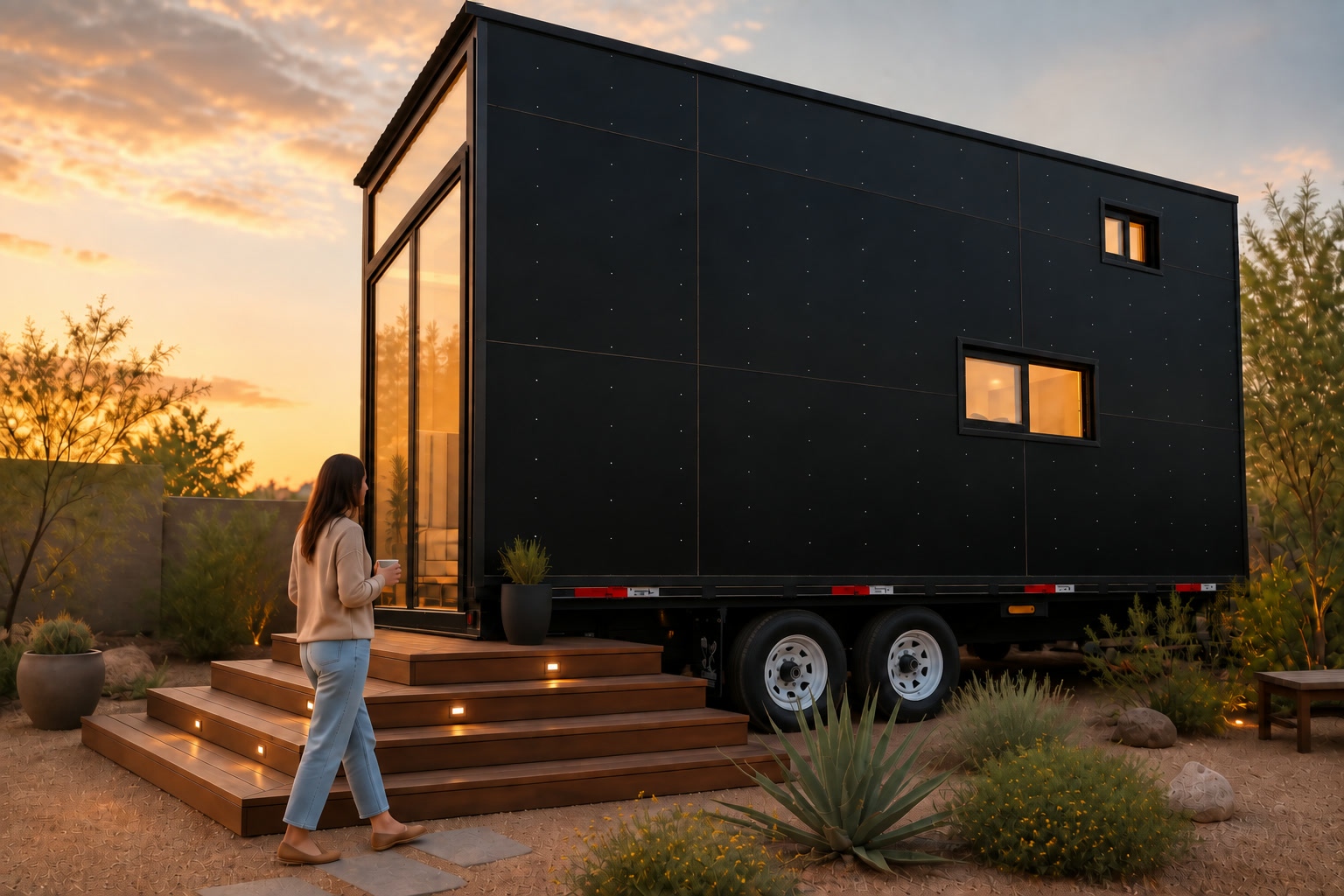
Rise20 is an 8 × 20 tiny home on wheels with roughly 160 square feet plus a sleeping loft. Because it is built on wheels, how it is classified and whether it may be placed, occupied, connected, or rented on your property depends on your local rules. LotRise does not claim that Rise20 is automatically approved as a dwelling or ADU anywhere. We help you organize the right questions before you commit. Start with our THOW vs. ADU guide and our delivery and buyer responsibilities page.