
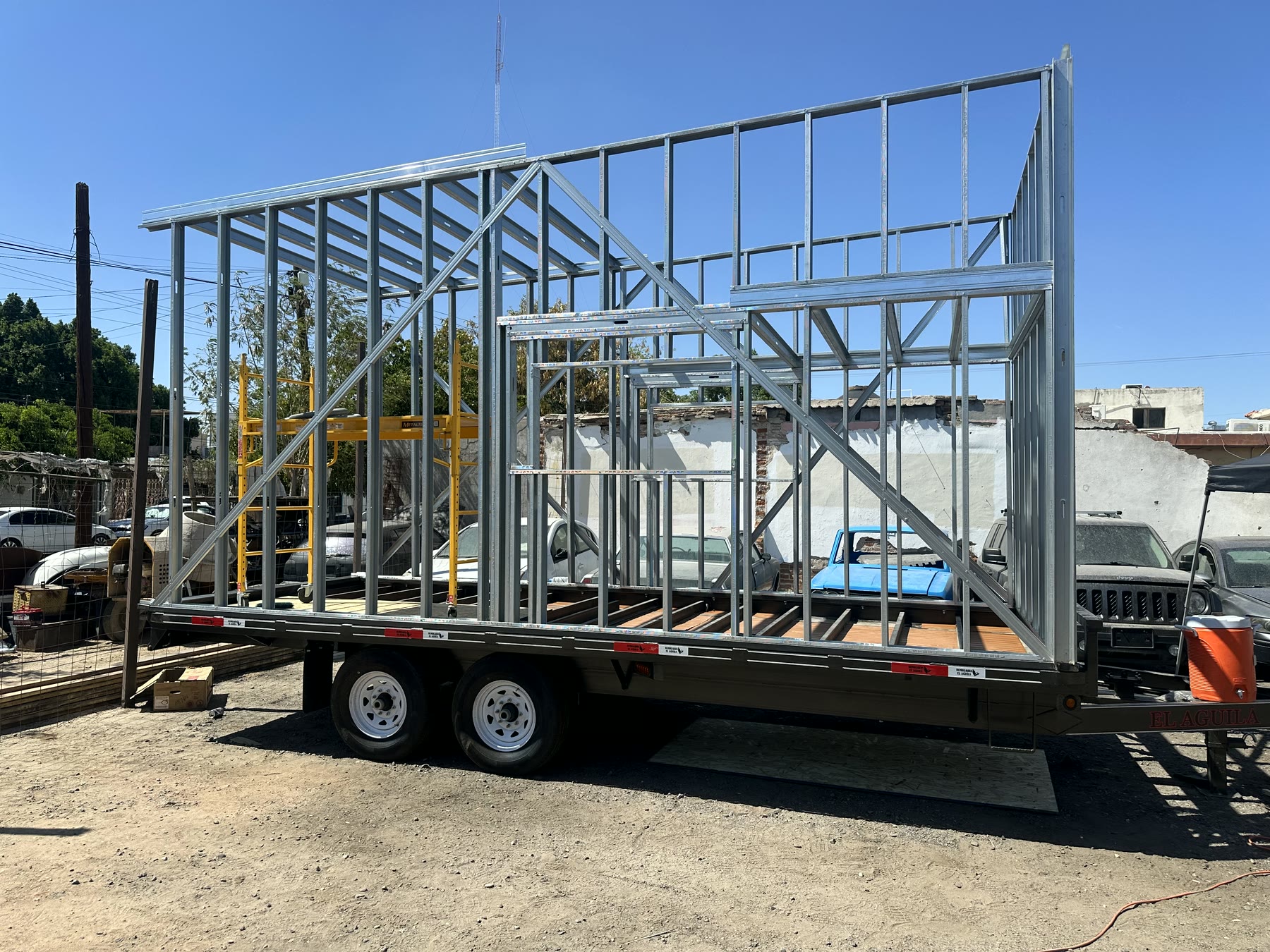
The short answer
Possible as a basic DIY shelter. Unlikely as a full-time home.
You can build a tiny house for about $10,000 only if you do all the labor yourself, keep it very small and simple, reuse a trailer or existing foundation, and source many materials secondhand. At that budget, expect a basic shelter or cabin: limited insulation, simple off-grid power, a composting toilet, and a minimal kitchen. A $10,000 build usually does not include a new trailer, a full bathroom, licensed electrical and plumbing work, permits, land, or utility hookups.
Key takeaways
- $10,000 is a materials-only budget for a small, simple, owner-built structure.
- A new tiny-house trailer alone can consume a large share of it.
- Plumbing, electrical, insulation, and windows are where low budgets break.
- Most owner-built tiny houses on wheels end up around $20,000–$50,000+.
- Land, permits, site work, and utility connections are always extra.
What can $10,000 realistically cover?
| Category | On a $10,000 budget | In a typical finished tiny home |
|---|---|---|
| Base | Reused trailer, skids, or existing slab | New trailer or chassis rated for the home |
| Structure | Small footprint, simple shed roof, salvaged lumber | Engineered frame sized for weight and travel |
| Windows + doors | Salvaged or reclaimed | New, sealed units |
| Insulation | Minimal or basic | Full envelope insulation and moisture control |
| Power | Extension cord, small solar kit, or generator | Full electrical system with panel and circuits |
| Water + bath | Composting toilet, jug water, outdoor shower | Full bathroom, plumbing, and hot water |
| Kitchen | Portable cooktop, basic counter | Kitchen with sink and appliances |
Where does a $10,000 tiny house budget usually break?
- The trailer. A tiny house on wheels needs a trailer rated for the finished weight. New ones cost several thousand dollars; used ones need careful inspection.
- Windows and doors. New, well-sealed units are expensive, so low budgets depend on salvage, which can complicate sizing and weatherproofing.
- Plumbing and hot water. A real bathroom with a shower, sink, drain, and water heater quickly exceeds a small budget.
- Electrical. A safe, code-appropriate system with a panel and circuits often requires a licensed electrician.
- Insulation and climate control. In hot or cold climates, skimping here makes the space uncomfortable and invites condensation and mold.
How to keep a tiny house build as cheap as possible
- Shrink the footprint.Every square foot adds framing, sheathing, roofing, and finish materials.
- Keep the roof simple.A single-slope shed roof is cheaper and easier than gables or dormers.
- Buy salvage early.Design around the windows and doors you find, not the other way around.
- Phase the systems.Start with simple power and water, and plan upgrades for later.
- Confirm the rules first.Learn whether you can legally place and live in it before you spend money.
Is a $10,000 tiny house worth it?
For a weekend cabin, studio, or a learning project on land you already control, a $10,000 build can be very rewarding. For full-time living, guests, family members, or any rental use, most buyers need insulation, a full bathroom, a working kitchen, and systems that can pass local review, which pushes the budget well above $10,000. Read whether it is cheaper to buy or build to compare paths.
What does a finished tiny home cost instead?
LotRise’s Rise20 is a finished 8 × 20 tiny home on wheels with a steel frame, kitchen, full bathroom, sleeping loft, electrical and plumbing systems, and tankless hot water. It starts at $45,000 per home, with shipping and taxes extra, and financing is available through Acorn Finance subject to credit approval. See pricing and financing.