
The short answer
DIY saves cash. Buying saves time and risk.
Building a tiny house yourself is usually cheaper in out-of-pocket dollars, because you replace a builder’s labor and margin with your own time. But DIY is not free: first-time builders often spend six months to two years, buy tools, redo work, and hire licensed trades for electrical or plumbing. Buying a finished tiny home costs more up front, but it gives you a fixed price, a defined scope, and a home you can use in weeks or months instead of years.
Key takeaways
- DIY tiny houses on wheels commonly land around $20,000–$50,000+ in materials and systems.
- New builder-made tiny homes commonly range from the mid-five figures to $100,000+. Rise20 starts at $45,000 per home, shipping and taxes extra.
- Your time has a cost. Hundreds or thousands of labor hours are the real price of DIY.
- Mistakes in framing, weight distribution, moisture control, or wiring can erase DIY savings.
- Either way, land, site work, permits, and utility connections are separate costs.
What does each path really cost?
| Cost item | Build it yourself | Buy a shell | Buy a finished home |
|---|---|---|---|
| Trailer / chassis | You buy it (often several thousand dollars new) | Included | Included |
| Framing + exterior | Materials plus your labor | Included | Included |
| Electrical + plumbing | Materials, plus licensed trades where required | Usually your responsibility | Included in the build |
| Kitchen, bath, finishes | You source and install | You source and install | Selected in your configuration |
| Tools + workspace | You buy or rent | Fewer needed | Not needed |
| Your time | Months to years | Weeks to months | Minimal |
| Price certainty | Low; overruns are common | Medium | High; written quote |
Why is DIY cheaper on paper?
A builder’s price includes skilled labor, overhead, warranty exposure, and margin. When you build yourself, you remove those line items and pay only for materials, equipment, and any trades you hire. If you already own tools, have construction experience, and can work steadily, DIY can genuinely save money.
What are the hidden costs of building a tiny house yourself?
- Time: A part-time build can take a year or more. If you are paying rent meanwhile, that is part of the cost.
- Tools and space: Saws, drivers, a covered workspace, and safety gear add up quickly.
- Rework: Mistakes in leveling, waterproofing, or ventilation are expensive to fix after finishes are installed.
- Weight: A home on wheels must stay within the trailer’s rated capacity and be balanced for towing. Heavy materials can force redesigns.
- Licensed work: Many jurisdictions require licensed electricians or plumbers, or inspections, for connected systems.
- Financing and resale: Lenders and future buyers often favor homes from an established builder with documentation.
When does buying make more sense?
Buying usually wins when you need the home on a timeline, want a predictable price, do not have construction experience, plan to finance, or value a documented build. It is also the clearer choice if the home supports a business goal such as a guest stay or family space, where months of delay have a real cost.
When does building make more sense?
DIY can be the better fit if you have skills and time, enjoy the process, want a highly unusual layout, and accept that the timeline and budget will move. A shell is a reasonable middle ground if you want to do the interior work but not the structure.
Where does Rise20 fit?
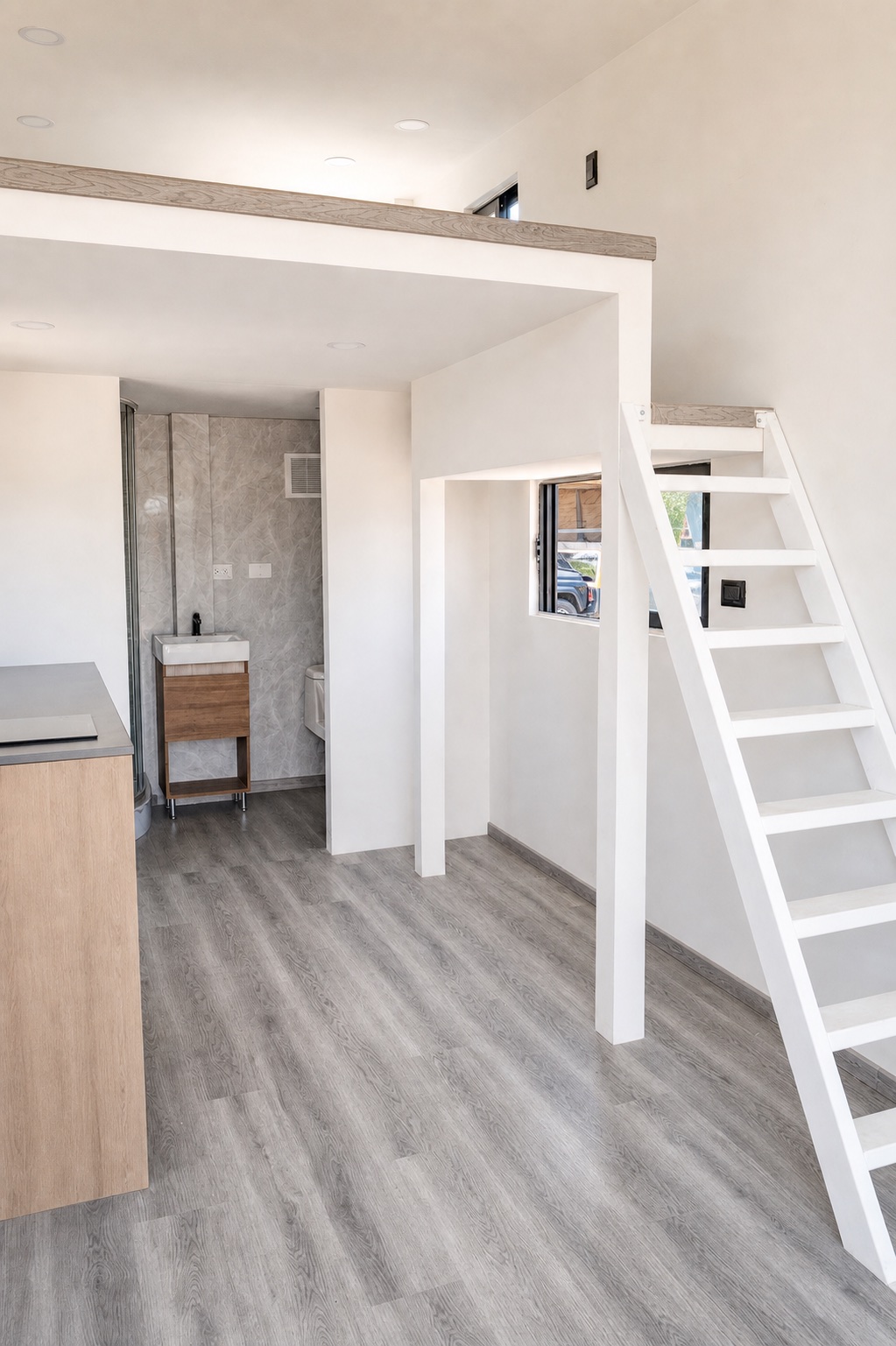
Rise20 is LotRise’s 8 × 20 tiny home on wheels: a steel-framed structure with an aluminum composite exterior, roughly 160 square feet plus a sleeping loft, a kitchen, full bathroom, living area, electrical and plumbing systems, and tankless hot water. It starts at $45,000 per home, with shipping and taxes extra, and your written quote confirms the configuration before production. Site preparation, approvals, and final utility hookups remain the buyer’s responsibility. See Rise20 pricing, how it’s built, and financing options.